
Saints and sinners
Do you know if you can trust your affinities?

Prescript: I’m going to kill some darlings, maybe some of yours.
If you’re a new reader, apologies. If you’re familiar with my work or me, you realize that I do this. It’s made my online presence interesting. I just keep posting activist stuff, select articles I’m reading, and over time, I seem to shed voices that challenge me.
The ones that gather the energy usually start sending me TikToks they trust more than fact-checked news.
Privately, I mutter, “Do you know who the heck I am?” (Trained journalist here.) But that’s my internal voice. Externally, I nod and try to think of gentle but challenging lines of questioning or affirmative statements for what is worthy in their perspectives.
But I’m burying the lede. What darlings will I smother?
My love-hate relationship with identity politics and affinities.
It begins here: I lead a book club for my local League of Women Voters called the Well-Read Citizen Book Club. We’ve been an eclectic mix for the past four years: several professors retired from the local all-men’s college, their wives, support staff, a few professionals like me, retirees, teachers, a former Peace Corps volunteer, a transplant from Utah and sometimes, other drop-ins.
Last month, only six of us met, all white women over a certain age.
There we were, being a kind of “typical” book club that Karla Cornejo Villavicencio thought would gravitate toward her book, almost the type who decided that being an antiracist in 2023 meant reading White Fragility or Between the World and Me. As if discussions about injustice are the same as action.
When I taught in a brick-and-mortar classroom back in the early 2000s, I hung a Confucius quote for my students.
What you do speaks so loudly, I cannot hear what you say. - Confucius

“Yes, yes,” I told my students. “There is no frigate (ship) like a book, as Emily Dickinson said, if you have a good imagination. BUT… ideas in books are neutered if you don’t take action when you agree with them.”
Then I taught them to connect Paul Laurence Dunbar’s “We Wear the Mask” and the history of Bert Williams. 1
Those kids understood putting on masks.
We got into the blues via Langston Hughes many poems, including “The Weary Blues” and others. We took a pitstop at “Harlem” and buried griefs and anger in dreams deferred before taking it back in the Black experience, swaying right into Billie Holliday’s “Strange Fruit” and before we dipped into Kanye West’s sampling in “Blood on the Leaves” before we read some Toni Morrison. Then we banged right up against Ralph Ellison’s “The Black Ball” before I played them “The Death of Emmett Till” by Bob Dylan. The kids learned meter, rhyme, blues rhythms, history, protest poems, short story craft and analysis.
We’d transition from that unit to one centered on women and youth in American literature, using Dylan’s “It’s All Over Now, Baby Blue.” After analyzing it, we read, “Where Are You Going? Where Have You Been?” Both pieces focused on a weird guy called the “Pied Piper of Arizona.” Was he a serial killer or not? <shrugs>
From there, we dove into disappearing children in Native American literature, with “Saint Marie,” which took us into the many native tales, including an Ojibwe “Cinderella” story and numerous oral stories of indigenous people. We spent some time with short stories of modern native writers, including Sherman Alexie’s The Lone Ranger and Tonto Fistfight in Heaven. We’d take a sad swerve into Ernest Hemingway’s “Indian Camp.” <shudder>
We often took detours. I added pit stops. I’d use Socratic questioning to help my low-income, usually white, though occasionally Latino, students think through the injustices documented in literature, art, and music. (Yes, I brought in prints of famous art that now decorate my house. I do sleep under the auspices of Picasso’s horrific “Guernica,” which I used in teaching Hemingway and Chaim Potok.2
Anyone familiar with any of that literature would recognize my fatal flaw. I get a kick out of challenging people, myself included, out of their comfortable beliefs.3
My book people are here for it. Karla Cornejo Villavivencio didn’t want people to just read and forget from their soft couches with their glasses of wine and plates of hummus and organic chips on compostable plates.
Being an immigrant in the U.S. has never been easy. Now it’s torturous.
So I love that the book club voted to read this book.
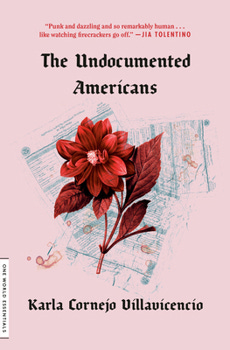
Six white women discussing Karla Cornejo Villavivencio’s The Undocumented Americans, The author said in one interview that she let her “performance artist” and anger come through. She didn’t want one of those “suffering” narratives that middle and upper-class folks fetishize. Nor did she want to shy away from the difficulties that undocumented Americans face under unjust policies.
There we were, all weighing the author’s persona and the anger she writes into it and asking, “How much anger are we allowed to lean into?”
We book club gals are people who value our undocumented family, friends, neighbors. The daughter-in-law, the clients, the neighbors, the people we call or visit or advocate for who have been indefinitely detained in the now for-profit cinderblock hellholes that destroy families and households.
We talked about Karla’s anger, and we failed the homogeneity test. One of us found the author’s narrative persona difficult. Others nodded an acknowledgment that Karla’s partner is a woman.
Which brings me to the shift. Here is where I really throw a pillow on your face.
I’m a priest’s wife. The jury will have to judge if I’m a good one because I’m a pistol.
Not all of you are Orthodox. Maybe you want to duck out here, but maybe you want to be a fly on the wall on a current debate raging in our little subculture. We have this American who goes by the name Seraphim Rose. This is his church name. This happens in our tradition. A person takes on a saint when they are baptized and when they come in as adults (as opposed to being born into the Church). When they take Eucharist/Communion, the priest gives it to them by their church name. Some insist on being called their church name at church or in life. Others enter certain offices of the church and expect to be called by those names.4
This guy, Seraphim Rose, was born Eugene Dennis Rose in August 1934 in California in a Methodist tradition. His father was a WWI vet who ran the Karmel Korn Shop in San Diego.
I had to look that up. When he grew up, he became an atheist, curious about Eastern philosophy. He later found a place in eastern Christianity.
But I’m burying the hook. He’s controversial because he had some debatable takes. I haven’t read them. He has wonky eschatology or afterlife ideas. He has a take on aliens that he theologized. I just heard he has some strident ideas about LGB people. <sigh>
Like him, I wasn’t born into this tradition and confession. I’ve only been in this tradition for a quarter of a century. When adults come in, we get an opportunity that our children may not get. We “pick” a saint, usually someone who shares our name or its variation, or our birthday, or the day on which we’re chrismated (or confirmed as it’s known in the West).
When we were brought into this tradition on Palm Sunday, when our youngest was one, I didn’t want to pick Mary, the Mother of God. I mean, Mary caught me when I read “She stored these things up and pondered them in her heart.” I felt seen. But also, she said yes, not just to bearing God in her womb, but being letting him one up her — I mean, he was her savior — but she also watched him die. <eeek>
So I picked one who would make me work harder at my faith. Venerable Mary of Egypt.
That’s a whole complicated, multiple-takes story. I mean, Saint Mary of Egypt was likely an underage sex worker. Maybe it wasn’t “underage” in ancient times. Was she trafficked? Who knows? We might say so now. (Sex trade is fraught, people.) Trauma? Likely but eff off. They won’t let you see it. They’re doing what they have to do in order to pay the bills. Have you met a sex worker? I have. Save your pearl clutching. One of my favorite stories from Karel Čapek called “The Last Judgment” will remind you that what we learned as children to survive can follow us into adulthood and prompt horrors.
Who knows what formed Mary of Egypt? She lacked therapeutic understanding, so she took full responsibility for her actions. And her shame.
As one dogged by shame for most of my life, I chose her when we came into the Church. Her response to her failures was to disappear into the desert. Mine was to regularly make a plan to off myself. After all, if I were causing others to stumble or hurting them, better to disappear, right? 5
When we were being educated (“catechized”), I learned about a “not yet” saint — Maria of Paris — Saint Maria Skobsova was first twice divorced. Subversive — she’d plotted to kill Lenin, but her friends dissuaded her. Acquitted for being on trial as a Bolshevik, she fell in love with her judge. They fled Russia with her mother and her daughter. They emigrated to Paris after a sojourn in Georgia and Yugoslavia. There she rediscovered Christ. After two more children and studying theology and social work, she divorced the second time and agreed to become a monastic, on one condition: she wouldn’t have to live in a convent apart from the rest of the world. Her youngest child died.
From a rented house in the 15th arrondissement, she, her grown son Yuri, and Fr. Dmitri Klepnin served the poor. Always ready to discuss philosophy and theology, Maria lingered at cafes, a cigarette and wine at hand. Another Russian ex-pat, Metropolitan Anthony Bloom, found her habit of being impious, noting that she was late for services and smoked too much.
When France capitulated to the Nazis, her convent became a hub for providing baptismal papers for Jews, and when Jewish people were rounded up in the velodrome, she helped smuggle children out in trash cans.
She put everything on the line and died in Ravensbrücke Death Camp in 1945. The Orthodox among us will draw a breath that she died on the Saturday before Easter.
The quality of Maria’s character, born out by her actions, resonates with me. Like Mary of Egypt, she challenges me to make my faith more than a mere profession.
Your actions speak so loudly, I cannot hear what you say. - Confucius
Unlike Mary of Egypt, who withdrew into the desert to reckon with her sins, to make her repentance real, Maria engaged more deeply. I see parts of myself in Maria. I imagine she and I are built similarly — drawn to the big topics, to the impact of politics on the lives of the poor and marginalized, unable to resolve an unembodied, cerebral Christianity. Either the Kingdom of God is present now, or it’s misleading people to push for the afterlife and creating an unrealized hope for themselves. Everything is staked on the testimony of a few people 2000 years ago.
When she was canonized a saint in 2004, I wondered if I could switch my patron saint. A very subtractive urge. Instead, I added her to “my” saints.
And had her words inked on my arm.
Love to the end without exception.
Affinity to Saint Maria comes with self-awareness. Just because I find her relatable doesn’t mean she should be my saint. I might be self-selecting a silo of saints that don’t challenge me in uncomfortable ways.
I was thinking about this a lot this week, as the canonization of Seraphim Rose mucks up fringy stuff that reminds me of the mess in my charismatic-evangelical youth — aliens as demons, intolerance for people who fall in love with someone of their own gender, conspiracies about “the mark of the beast.”
The debate around one person up for sainthood may seem strange to non-Orthodox. Good on you. But….
Do you have people you trust/like/hold dear more than others? There’s nothing inherently problematic about this.
Until.
It’s the economist or best-selling author, the thinker or the person with health advice.
How do we know when we’ve crossed the line from “I really appreciate what this person says” into making this person our cult of personality?
I’m not 100% sure. I heard Rob Saler speak on the closeness of faithful thinking and conspiracy thinking, and I want to ask him a lot more questions about this. I think there’s a crossover in what he said on the topic of conspiracy thinking and what I’m addressing here.6
But here’s what I use as benchmarks:
Have I stopped vetting the claims of the person I admire? 7
Would my vibes be disturbed if someone challenged their credibility?
Do I feel more loyalty to them than to the ideas that we hold in common?
Are the ideas we hold in common backed by sound evidence? How do I know? Would my ideas stand up in debate? How do I know? Is my defense of them based on my identity or emotions? Am I willing to be open-minded? How much?
If the ideas we hold in common start to show cracks and flaws, would I rethink my loyalties?
Am I aware that people can and do change?
If I notice that something that person does triggers an alarm internally, would I notch it and pay attention? Or would I put my loyalty to them above my principles? Or my ability to fit into my affinity group?
Do I have a clear, explicit, updated list of my principles at hand?
I need to be made uncomfortable in my faith. If faith serves to ease my way in life and doesn’t help me point towards meekness, purity of soul, an ability to mourn authentically, peacemaking or do what is right towards others, it’s hollow.
See what I did there? I told you my principles. Sorry to be so obvious.
If the “saints” or the worship leaders, pastors, modern “prophets,” church founders, evangelists, best selling Christian authors, Christan powerhouses, aren’t held up for some fruit of the spirit — gentleness, faithfulness, joy, peace, patience, kindness, goodness, self-control, then I’m unlikely to be drawn to them, even if they scratch an itch in my intellectual curiousity.
Bert Williams and Paul Laurence Dunbar were famous and wealthy, and still faced terrible discrimination. Another amazing figure in history is Paul Robeson. (Can I urge you to listen to the rest of his story on This American Life’s episode “Bless This Mess”— I didn’t know the half of it.)
Particularly Davita’s Harp https://www.goodreads.com/book/show/14769.Davita_s_Harp
In my last five years of teaching, I had threats for my teaching choices, not just “these high schoolers are too young for this” but actual “I will report you to the DOE and have your license revoked.”
Fine by me if you want to live a good life and be a peaceable human, not demanding things like respect and recognition from others for your office or good deeds. Forgive those who “dead-name” you. You’re a Christian, and things like humility and mercy are our brand after all. No excuse to get on your high horse about trans people. This is not a polemic to be anti-trans.
Wrong. That’s the depression from unhealthy shame talking. Mary made the best of it. I wasn’t making the best of it. But I’m still here and have fewer bouts with ideation now. So good on that.
Full disclosure: I count Rob Saler as a friend.
RN I’m listening to Recollections of My Nonexistence by Rebecca Solnit. I think I’ve read a huge number of her works. Am I willing to have her notions on the erasure, silencing, or gaslighting of women by insecure men challenged? I mean….
“I need to be made uncomfortable in my faith. If faith serves to ease my way in life and doesn’t help me point towards meekness, purity of soul, an ability to mourn authentically, peacemaking or do what is right towards others, it’s hollow. “
👆this
I hold my assumptions loosely, and question my beliefs constantly. I have no qualms killing darlings—my own or others—if it means I can get closer to the truth.
What you have written reminds me what a friend told me this week when he reached out to me to vent about his friend dying of cancer, and all the Christian cliche’s he heard.
He will never darken the door of a church, but he’ll talk to me knowing full well what a hot mess I can be.
He pointed out I keep my faith in the real world. I wish I could say I came up with that on my own, but I learned it from my mother who was very much like St Maria of Paris.
What’s on paper does not alway translate in the real world.
I think you and I have a parallel approach because I think a faith that does not engage the real world with its real joys and real pains is not a faith worth having.